How to Restore 1970s Polaroid Photos
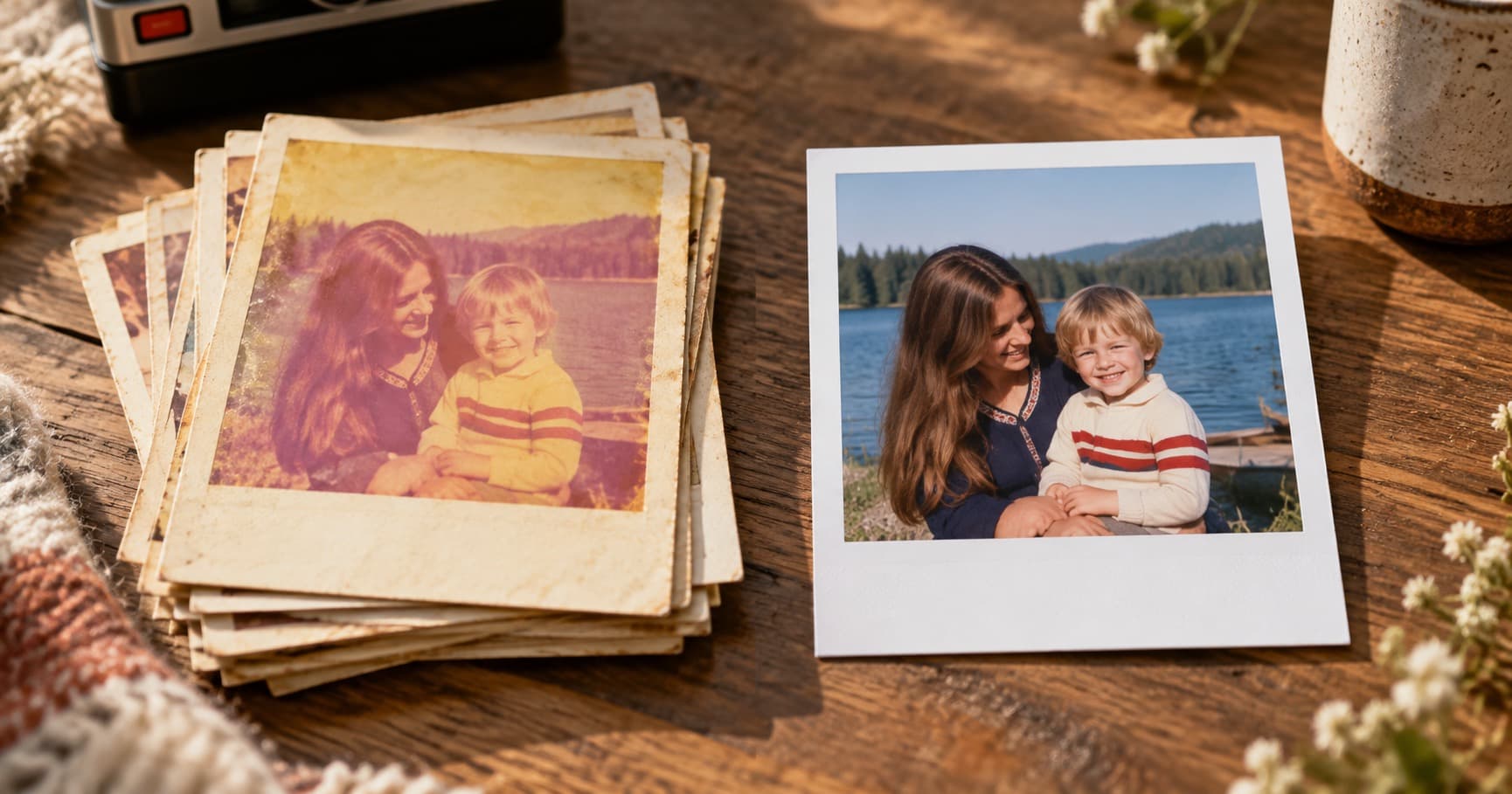
Polaroid photos from the 1970s have a distinctive look — warm tones, soft focus, the iconic white border. They also have a distinctive problem: the chemistry that produced those instant prints starts breaking down within a few decades, leaving most family Polaroids from that era faded, color-shifted, and barely readable.
If you have a shoebox of Polaroids from your parents' wedding, your own childhood, or family vacations from the 1970s, here is what's happening to them — and how to bring them back.
Why 1970s Polaroids Fade Faster Than Regular Photos
Polaroid instant film uses a layered chemical sandwich that develops in front of your eyes. Traditional film prints, by comparison, are produced in a darkroom with stable chemistry and protective coatings.
The 1970s Polaroid layers were never meant to last 50 years. Three things go wrong:
- Magenta shift. The cyan and yellow dyes break down faster than the magenta dye, leaving the photo pink or red.
- Yellowing. The clear protective layer turns yellow as it ages.
- Highlight fade. Bright areas lose detail first because the chemistry there is less stable.
The result: faces look washed out, skin tones go orange, and the photos that captured your family's most important moments slowly disappear.
What You Should Do First
Before any restoration, do this:
- Stop the damage. Move Polaroids out of attics, basements, and direct sunlight. Store them flat, in archival sleeves, at room temperature.
- Scan or photograph them now. Even a clear phone photo is enough to preserve the current state digitally.
- Don't try to clean the surface. Polaroid surfaces are fragile and easy to scratch.
Once you have a digital copy, you can restore the photo without touching the original.
How AI Restoration Fixes 1970s Polaroids
Modern AI restoration handles the three Polaroid failure modes at once:
- Color correction reverses the magenta shift and rebalances skin tones.
- De-yellowing removes the cast on the white border and highlights.
- Detail reconstruction brings back features in faded faces and washed-out highlights.
Older tools required hours of manual Photoshop work to do this. A modern AI model trained on millions of color and aged photos does it in 2 to 5 minutes.
Step by Step: Restore a 1970s Polaroid
- Get a digital copy. Scan at 600 DPI on a flatbed scanner, or take a clear, well-lit phone photo. Avoid glare on the glossy surface.
- Upload to a restoration tool. PhotoHeirloom accepts JPEG, PNG, and WebP up to 10MB. The first 3 restorations are free.
- Let the AI run. The model detects the magenta shift, yellowing, and faded areas, then reconstructs natural color and detail.
- Compare before and after. A slider shows the original and restored versions side by side. If you want a different style, re-run the restoration.
- Download and share. Save the high-resolution result. Add it to a family album, share with siblings, or print it.
Common Restoration Mistakes to Avoid
- Over-sharpening. Polaroids have a naturally soft look. Pushing sharpening too far makes them look artificial.
- Forcing modern saturation. 1970s Polaroids were never as vivid as digital photos. Aim for natural, period-correct color.
- Throwing away the original. Even after restoration, the physical Polaroid has emotional value. Store it properly.
Polaroids Worth Restoring First
Not every Polaroid needs immediate attention. Prioritize:
- Photos of deceased relatives
- Wedding and milestone photos
- Photos where the magenta shift or yellowing is already severe
- Unique photos where no other copy exists
Photos that are still in good shape can wait — but they will fade eventually. Scanning everything now is the safest move regardless of restoration timing.
What About Polaroid SX-70 vs Polaroid 600?
Both formats from the 1970s suffer the same fading patterns. SX-70 prints tend to be slightly more stable because of their integral chemistry, while early 600 film fades faster. The same AI restoration approach works for both.
Restore Your 1970s Polaroids
Polaroids are some of the most personal photographs in any family archive — informal, candid, taken at the moments traditional cameras weren't around. Don't let the chemistry destroy them.
Start with 3 free restorations and bring your 1970s Polaroid memories back to life.