We Restored a 100-Year-Old Wedding Photo
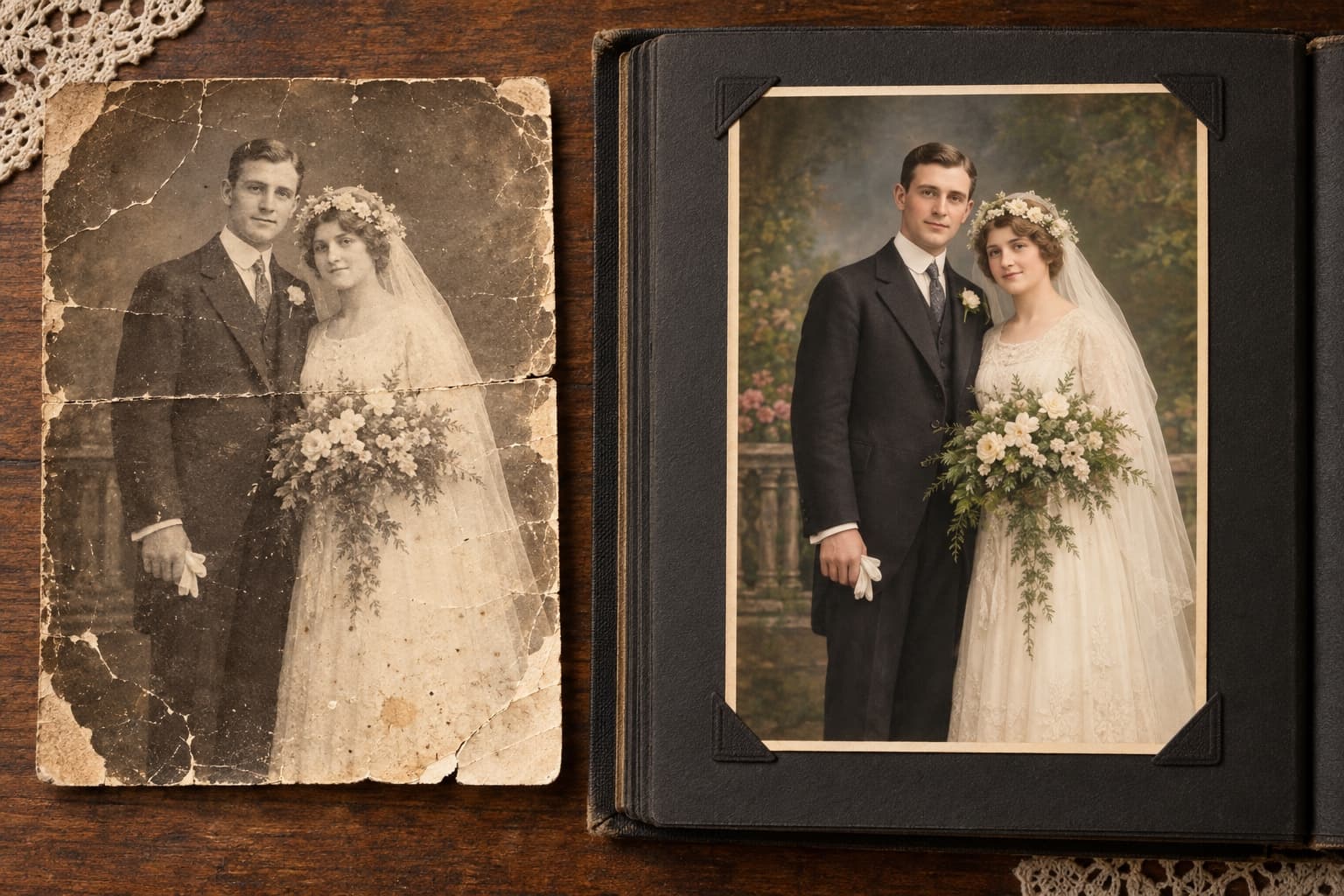
The photograph arrived in a small envelope with no date on the front. The family believed it showed a wedding from the early 1920s, but they could not agree on the location or the names of the couple. The print had survived a move, a damp cupboard, and several decades in a drawer.
What We Were Working With
The paper was soft at the edges. A diagonal crease crossed the groom's jacket, and a pale water mark covered part of the bride's sleeve. The faces were visible, but the contrast was so low that the eyes nearly disappeared into the background.
One corner had been folded back and never flattened. The original was still valuable, but it was too fragile to pass around the family table. The first step was to photograph it carefully and save an untouched digital copy.
The Restoration Process
The digital image was straightened, cropped, and repaired as a copy. Fading was reduced, the crease was softened, and the water mark was removed from the background. The black-and-white version was kept so the family could compare it with a colorized version.
Restoration is not a time machine. It cannot prove the color of a dress or recreate every missing detail exactly. The goal was to make the photograph easier to see while keeping the character of the original print.
The Reveal
In the restored image, the family noticed the small details first: a narrow ribbon at the bride's waist, a light line of embroidery on the dress, and a row of trees behind the couple. Those details were present in the original, but fading had made them easy to miss.
The restored image also made the expression on the groom's face clearer. That changed the conversation. Instead of asking only when the photo was taken, relatives began asking who might have stood behind the camera.
Why This Kind of Restoration Matters
Old photographs are evidence, but they are also invitations. They give families a reason to ask questions while someone still remembers part of the answer. A restored copy cannot replace the original. It can make the original story visible enough to continue.
If you have a photo that has been waiting in a drawer, start with a scan or a careful phone photograph. Keep the untouched file, then try a restoration on a copy.